

When selling luxury off-plan properties, high-quality 3D visuals are no longer optional - they’re a must. Buyers now expect photorealistic renderings, virtual walkthroughs, and interactive 360-degree tours to visualise their investment. These tools help bridge the gap between imagination and reality, allowing buyers to experience the property and its lifestyle before it’s built.
Key Takeaways:
- Why It Matters: Buyers demand precise, immersive visuals to justify multi-million-dollar investments.
- What Works: Photorealistic renders, VR walkthroughs, and 360-degree tours showcase details like lighting, textures, and layout.
- Buyer Impact: Properties marketed with 3D visuals sell faster, often for higher prices, and build buyer confidence.
- Tools & Techniques: Advanced software like Unreal Engine 5 and V-Ray create lifelike visuals, while VR and panoramic tours offer interactive exploration.
Laurent Visuals stands out in Australia’s luxury property market by crafting tailored 3D solutions that resonate with buyer expectations and elevate off-plan sales strategies.
Casale Residence in Los Angeles | Ultra-Luxury 3D Home Animation
How 3D Visualisation Affects Buyer Engagement and Sales
The use of 3D visualisation has transformed how buyers interact with properties, creating a more engaging and immersive experience. By offering virtual tours of homes yet to be built, this technology bridges the gap between imagination and reality. Let’s explore how 3D visualisation makes unbuilt spaces feel real and taps into the emotional side of luxury property sales.
Making Unbuilt Spaces Feel Real
3D visualisation taps into our natural ability to understand and interpret spaces. It allows buyers to virtually explore properties long before construction begins, giving them a clear sense of layout, scale, and design. This virtual experience makes it easier for buyers to picture themselves in the space, effectively bringing unbuilt properties to life. In the world of luxury real estate, this capability reshapes how buyers perceive and connect with high-end properties.
Creating Emotional Appeal in Luxury Sales
Luxury property sales are about more than just the physical structure - they’re about selling a dream. High-quality 3D visualisation helps convey that aspirational lifestyle by transforming properties into vivid, emotionally resonant experiences. Buyers aren’t just purchasing a house; they’re investing in a vision of their future. By creating these emotional connections, 3D visuals not only boost buyer confidence but also strengthen the luxury brand image, which is crucial for off-plan sales success.
These immersive tools don’t just inform buyers - they inspire them, making 3D visualisation a powerful asset in today’s competitive real estate market.
Main 3D Visualisation Tools and Techniques for Luxury Projects
The evolution of 3D visualisation technology has transformed how luxury properties are showcased, offering a level of realism that captivates potential buyers. By understanding these tools and techniques, you can select the best approach for off-plan projects, creating immersive experiences that leave a lasting impression. Let’s explore some of the key methods that elevate visualisation in high-end real estate.
Photorealistic Stills: Capturing Every Detail
High-resolution still renders bring properties to life with a level of detail that rivals professional photography. These images highlight textures, lighting, and architectural elements, offering a realistic preview of the finished space.
Top rendering engines like Unreal Engine 5 and V-Ray use ray-traced lighting to simulate natural and artificial light with precision. Imagine seeing how morning sunlight accentuates the veining in marble countertops or how warm evening lighting transforms the ambience of a living room.
With physically-based rendering (PBR), materials are depicted realistically under various lighting conditions. For luxury buyers, this means every detail - whether it’s the grain in imported timber flooring or the reflective sheen of brushed stainless steel - feels authentic.
Framing and staging are equally important. Skilled 3D artists craft compositions that showcase a property’s best features while maintaining architectural accuracy. They often include lifestyle elements like curated furniture and décor to help buyers envision themselves in the space without overwhelming the design.
Virtual Reality Walkthroughs: Immersive Exploration
VR technology takes property tours to the next level, turning them into active, immersive experiences. Buyers can navigate spaces naturally, gaining a true sense of room proportions and layout flow.
Using devices like the Oculus Quest or HTC Vive, buyers can virtually step into a penthouse or master suite, examining every corner at their own pace. They can even interact with elements - opening doors, adjusting lighting, or peering out windows - creating a connection that static images simply can’t achieve.
One of VR's standout features is real-time rendering, which allows instant changes during presentations. Buyers can experiment with different finishes or layouts on the spot, keeping the conversation dynamic and the decision-making process smooth. For those seeking a more accessible option, interactive 360-degree tours can complement the VR experience.
360-Degree Panoramic Tours: Accessible and Interactive
Panoramic tours offer an interactive way to explore properties from any device, making them especially valuable for international buyers who can’t visit in person - a common scenario in Australia’s luxury market.
These tours are accessible via web-based platforms, requiring no special hardware. Buyers can use their smartphones, tablets, or computers to navigate the property, making it easy to share with family or advisors involved in the decision-making process.
The technology captures spherical images, providing a complete 360-degree view of each room. Embedded hotspots can offer additional details about specific features, finishes, or amenities, enhancing the experience.
To ensure a seamless experience, image quality and loading speed are critical. High-resolution imagery - often in 4K or higher - delivers the clarity needed for buyers to zoom in and inspect details, while optimised file sizes ensure smooth navigation across varying internet speeds.
Panoramic tours also work well in phased marketing campaigns. As construction progresses, updated tours can showcase the development’s latest milestones, keeping buyers engaged and confident throughout the project timeline.
sbb-itb-1b6d2bc
Case Studies: 3D Visualisation Success Stories in Australian Real Estate
Top-service levels 3D visualisation is transforming Australia's luxury property market, speeding up sales and drawing in buyers with unmatched engagement. Let’s explore how this cutting-edge tool is making a difference.
Faster Sales Through Photorealistic Presentations
The numbers speak for themselves - properties with 3D virtual tours or high-quality renderings sell notably faster than those relying solely on traditional marketing methods. These visuals don't just grab attention; they keep buyers engaged. Listings featuring 3D or interactive elements see buyers spending 5 to 10 times longer exploring the property. The payoff? Properties using these tools often sell for up to 9% more than similar listings that don’t.
The impact doesn’t stop there. A whopping a majority of buyers are more inclined to call about a property when it includes a virtual tour, and 54% admit they wouldn’t even consider a property without one. These tools are reshaping how buyers approach their search, making it easier for them to connect with the properties that spark their interest.
Building Buyer Confidence with Virtual Walkthroughs
Virtual reality walkthroughs are a game-changer, especially for buyers unable to visit properties in person. These immersive experiences don’t just show a property - they allow buyers to feel like they’re already there. This emotional connection increases purchase intent by 23%. For a majority of buyers, virtual tours have become a critical factor in their decision-making process.
These tours eliminate geographic barriers, giving interstate buyers the chance to view multiple properties without leaving home. What’s more, they offer a personalised touch - buyers can experiment with different finishes, furniture setups, and lighting, tailoring the experience to their preferences. This interactivity doesn’t just build confidence; it creates a sense of ownership, even before the sale is finalised.
Improving Collaboration with Stakeholders
3D visualisation isn’t just for buyers - it’s a powerful tool for developers, architects, and other stakeholders. By integrating Building Information Modeling (BIM) with 3D tools, developers can create precise, data-rich representations that streamline both marketing and construction phases. This approach enhances communication, ensuring everyone involved has a clear understanding of the design vision. The result? Fewer project delays and better alignment across teams.
These tools also foster collaboration, allowing stakeholders to make informed decisions more efficiently. From project planning to marketing, 3D visualisation ensures everyone is on the same page, paving the way for smoother development processes and satisfied buyers.
Why Laurent Visuals is the Best Partner for Luxury Off-Plan Sales
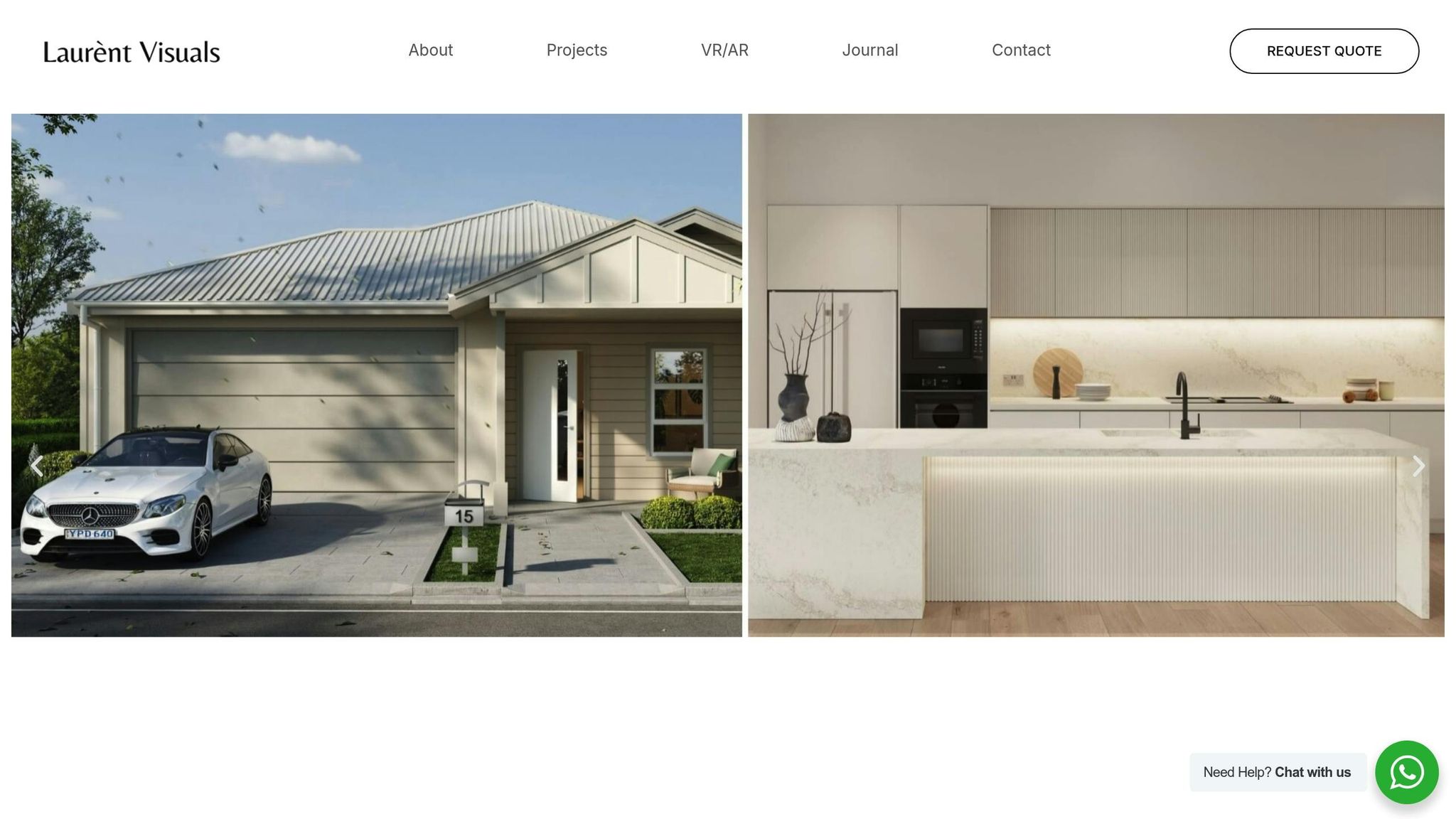
When it comes to selling luxury off-plan properties, having the right 3D visualisation partner can make all the difference. Laurent Visuals combines advanced technical skills, a deep understanding of the Australian market, and a refined process that delivers results. Their approach is designed specifically to meet the unique demands of the luxury off-plan property sector.
Tailored 3D Solutions for the Australian Market
Creating effective 3D visualisations requires more than just technical expertise - it calls for an understanding of local buyer preferences and market trends. The Australian luxury property market is as diverse as it is distinctive, ranging from Sydney’s waterfront penthouses to Melbourne’s elegant estates. Laurent Visuals captures these nuances, crafting visualisations that resonate with Australian buyers.
Their renders reflect the essence of Australian living, showcasing features like Brisbane’s abundant natural light or spacious outdoor areas ideal for year-round use. By incorporating local design trends, native landscaping, and other details that matter to Australian buyers, Laurent Visuals ensures their work feels authentic and relatable.
They also address the practical side of property development, factoring in local regulations, architectural styles, and buyer expectations. Whether it’s a sleek apartment in Perth’s CBD or a luxurious Gold Coast waterfront home, each project is tailored to its specific location and audience.
Comprehensive Service Suite
Laurent Visuals offers a full range of services to meet the needs of luxury property developers. Their offerings include:
- Photorealistic renders that highlight intricate design details and bring unbuilt spaces to life.
- Virtual reality experiences that allow potential buyers to explore properties before they’re constructed.
- Visual storytelling assets that create emotional connections and help buyers envision their future lifestyle.
Collaboration is at the heart of Laurent Visuals’ approach. They work closely with industry consultants to align their visual assets with broader marketing and sales strategies. This ensures that their visuals integrate seamlessly into campaigns, enhancing their effectiveness.
From early-stage colour previews to high-resolution final outputs, Laurent Visuals provides the flexibility developers need. Their visual assets are designed to work across various platforms, whether it’s a glossy brochure, a billboard, or a digital ad campaign.
A Proven Process for Quality and Precision
Laurent Visuals follows a structured process to deliver high-quality results. It starts with an in-depth briefing to understand the project’s goals, target audience, and marketing objectives. During this phase, detailed documentation captures essential information like dimensions, materials, and design specifics. This thorough preparation helps streamline the entire project.
Communication is a cornerstone of their workflow. Clients are kept in the loop with regular updates and opportunities to provide feedback, ensuring the final product aligns with their vision. The process also includes a set number of revisions, giving clients room for adjustments without unexpected costs.
Laurent Visuals is upfront about timelines and budgets, helping developers plan effectively. They emphasise that investing in high-quality visuals is not just an expense but a strategic step toward project success. This transparency builds trust and ensures smooth collaboration.
Before final delivery, every render undergoes rigorous quality checks to ensure it meets the brief and technical standards. Files are provided in a variety of formats, from web-optimised images to print-ready resolutions, making them suitable for any marketing channel. The result? Visuals that not only look stunning but also inspire confidence in potential buyers.
…continued on the original article.