

Premium 3D renders are transforming how off-the-plan properties are marketed in Australia's competitive real estate market. These high-quality visuals make it easier for buyers to understand a property's potential, leading to faster sales and higher prices. Here's why they matter:
- Better Buyer Confidence: Buyers can visualise living in the space, reducing uncertainty and increasing their willingness to pay more.
- Remote Appeal: Overseas and interstate buyers rely on detailed renders to assess properties, broadening the pool of potential buyers.
- Proven Results: Properties marketed with premium renders sell up to notably faster and for as much as 15–markedly higher prices.
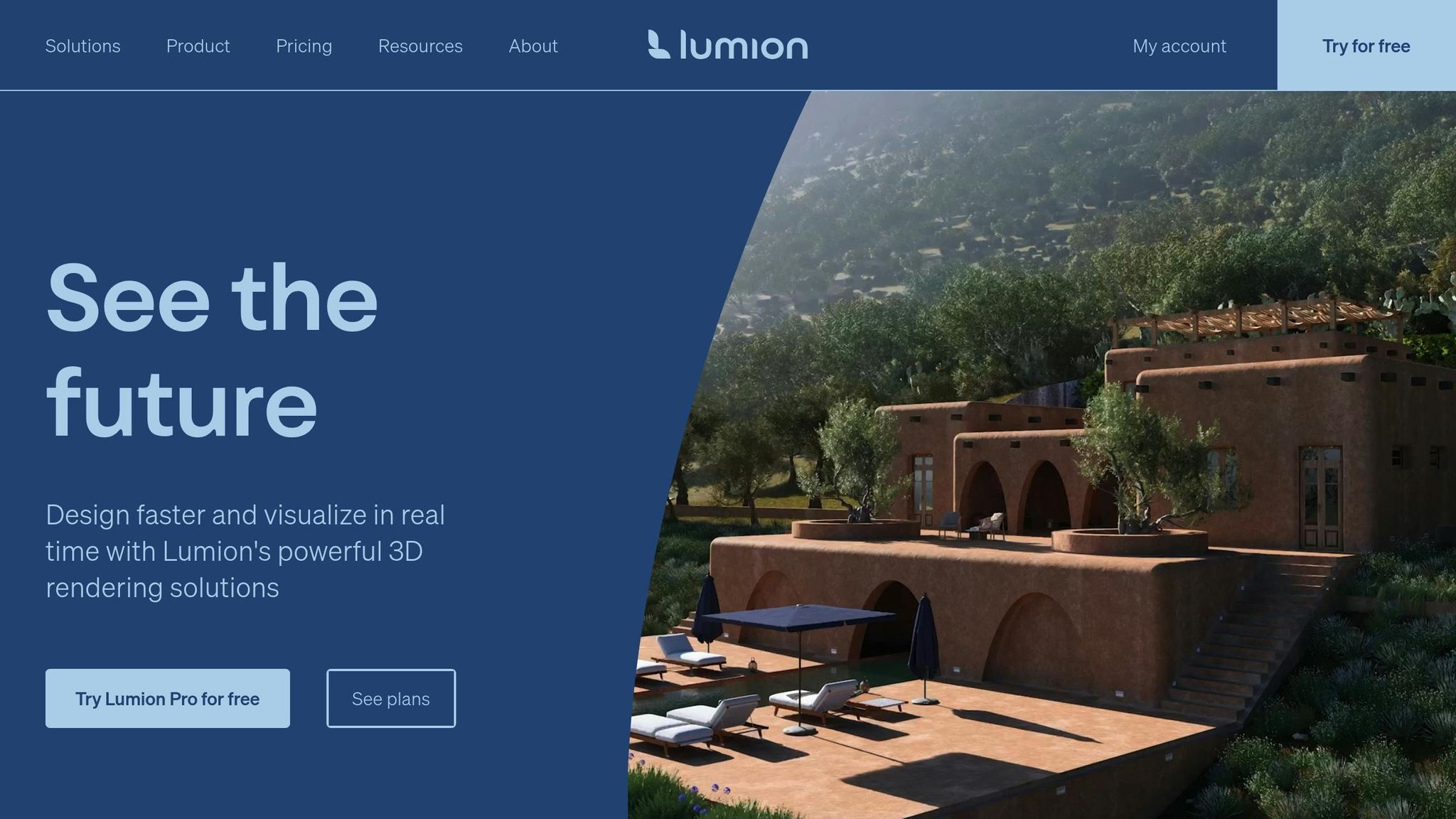
D5 vs Twinmotion vs Lumion, a Render Battle!
What Defines a Premium Render?
Not all 3D renders are on the same playing field. While basic visualisations might give you a rough idea of a property's layout, premium renders take things to a whole new level. They turn architectural designs into vivid, lifelike experiences that go beyond just looking good - they help developers sell at higher price points. How? By using advanced techniques and cutting-edge software to set professional work apart from amateur attempts.
Premium renders are where technical skill meets artistic flair. They don’t just show what a property will look like; they capture the feeling of living there. This emotional connection can nudge buyers to pay more, aligning perfectly with the idea that better visuals build buyer confidence and enhance perceived value.
Core Features of Premium Renders
Photorealistic lighting is the backbone of any premium render. Advanced lighting systems mimic natural sunlight, creating realistic shadows and reflections that mirror how spaces appear in real life.
Material precision is another hallmark. These renders showcase hyper-detailed textures, patterns, and finishes under natural lighting, even incorporating weather effects. Every surface - from polished wood to textured stone - feels authentic, bringing the design to life.
Post-production techniques, like matte painting, add the final polish. Borrowed from industries like film and gaming, these methods enhance colours, refine details, and extend the visual story beyond the property itself.
"A Picture Is Worth A Thousand Words." – Fred R. Barnard
This quote hits the nail on the head: every detail in a premium render works together to convey quality and desirability, no lengthy explanations required.
Top Tools for High-Quality Rendering
The right software is key to creating premium renders, and there’s no shortage of options. Each tool offers unique strengths suited to different needs and budgets.
- V-Ray is a go-to for architectural visualisation, especially in advertising and visual effects. At $60 per month, it delivers the photorealistic lighting and material precision that premium renders demand.
- Lumion focuses on accessibility without compromising on quality, making it ideal for showcasing how designs translate into real-world experiences.
- For bigger budgets, 3ds Max offers unparalleled flexibility. At $215 per month, it allows precise control over materials, textures, and lighting to achieve a polished, professional look.
- Enscape has gained popularity in Australia, with 85 of the top 100 architecture firms globally using it. At $39.90 per month, it provides professional results with user-friendly tools.
Of course, tools are only as good as the people using them. Premium results come from knowing how to maximise what these programs offer, laying the groundwork for even more immersive experiences like virtual reality.
Virtual Reality and Immersive Property Experiences
Building on the foundation of static renders, virtual reality (VR) takes property visualisation to the next level. VR transforms images into interactive experiences, allowing buyers to explore properties as though they were physically there. This technology addresses a major challenge in off-the-plan sales: helping buyers truly grasp spatial layouts and the overall vibe of a property.
VR walkthroughs let buyers move through spaces at their own pace, zooming in on details that catch their eye. This level of personal engagement can speed up decision-making and justify premium pricing.
Take The Wild, for instance. Specialising in high-end VR property marketing, it offers immersive experiences starting at $295 per month. Buyers can even customise finishes, layouts, and colour schemes in real time, making it easier to imagine their future life in the space.
For Australian developers eyeing international investors, VR is a game-changer. It enables detailed, remote property tours, expanding the buyer pool while reinforcing a premium market position.
How Premium Renders Boost Property Value Perception
The link between high-quality visualisation and premium property pricing isn't just a theory - it's backed by numbers. Premium renders enhance how buyers perceive value, often leading to higher sale prices and quicker transactions. Let's explore how this works, supported by examples and real-world results.
Shaping Buyer Perception
One of the biggest hurdles in real estate marketing, especially for off-the-plan developments, is helping buyers fully grasp what they’re investing in. Properties with premium visual content attract substantially more inquiries and sell notably faster than those relying on basic materials.
The secret lies in emotional engagement. Premium renders allow buyers to visualise themselves in a space, creating a strong emotional connection. This helps agents convey ideas more effectively and piques buyer interest well before auction day. When buyers can picture the lifestyle a property offers, they’re often willing to pay more to secure it.
Interior renders, for instance, bring designs to life by showcasing how materials, natural light, and textures interact. The benefits aren’t limited to local buyers either. High-quality animations and 3D walkthroughs enable remote property assessments, which is a game-changer for attracting interstate and international buyers. This expanded reach increases competition and boosts sale prices.
"Emotion is a key factor that drives deeper engagement." - Jonah Berger
By reducing uncertainty, premium renders make buyers more confident in their decisions - essential when dealing with significant financial commitments.
Case Studies: Proven Results
The Australian property market provides clear evidence of how premium renders translate into financial gains. Properties marketed with professional renders sell notably faster and for up to markedly higher prices than those without.
Take the example of a luxury apartment complex in Melbourne's CBD. By incorporating high-quality 3D renders into its marketing strategy, the development sold out quickly and at premium prices. The developer credited the renders with effectively showcasing the project's luxury and exclusivity, which resonated with buyers.
A similar success story comes from a high-end residential project in Sydney's Eastern Suburbs. Professional renders highlighted the development’s luxurious features and stunning harbour views, helping secure pre-sales at premium prices. Some units sold for 20% above the initial asking price, with the developer attributing this success to the renders’ ability to emphasise the property’s unique appeal.
Even in coastal areas, the impact is clear. A beachfront development in New South Wales used premium renders to highlight its location and luxury amenities. The visuals drew international buyers, leading to a complete sell-out before construction finished.
The return on investment for premium renders is undeniable. A Melbourne developer reported a a substantial increase in sales prices and faster project completion for every dollar spent on professional rendering. Faster sales, higher prices, and reduced marketing costs all contribute to this impressive ROI.
Listings with premium renders also perform better online. They attract more views, which leads to more inquiries, greater competition, and higher sale prices. For example, staged homes with 3D renderings or virtual tours see a 1-a substantial increase in buyer offers. Meanwhile, homes featuring virtual tours sell up to notably faster and for an average of 9% more.
These trends align with broader market dynamics. With apartment prices in Sydney expected to rise substantially and Melbourne substantially by 2025, developers who invest in premium renders are well-positioned to maximise value in a rising market. Combining increasing property values with enhanced buyer perception creates a powerful recipe for higher final sale prices.
sbb-itb-1b6d2bc
Targeting High-End Buyers with Premium Renders
When it comes to luxury property buyers, the stakes are different. They’re not just buying a house - they’re investing in a lifestyle, a symbol of status, and a valuable asset. For this exclusive audience, premium renders are essential for creating an immediate impression of sophistication and exclusivity. Let’s look at how these high-quality visuals position properties as true luxury offerings.
Positioning Properties as Luxury Listings
Luxury real estate demands more than just appealing photos - it requires visuals that justify the premium price tag. Research shows that listings with top-service levels visualisations attract substantially more inquiries and sell 20–notably faster compared to those with basic imagery. For high-end properties, these renders do more than showcase a home; they paint a picture of an aspirational lifestyle.
Buyers in this market want to imagine themselves in spaces that exude bespoke design and meticulous attention to detail. This is where ultra-realistic renders come into play, capturing every element - lighting, textures, finishes - with near-photographic precision.
Highlighting luxury amenities is another critical factor. From infinity pools to custom wine cellars, every feature should be rendered in stunning detail. Properties that visually demonstrate a strong connection to their environment can command 15–markedly higher prices. For example, a render showing how a home integrates seamlessly with its natural surroundings can elevate its perceived value significantly.
To cater to high-net-worth clients, customisation is key. Renders should reflect personalised touches, such as custom materials, layouts, or furnishings. Additionally, day-to-night renderings are gaining traction, with studies showing they can boost client conversion rates by 30–35%. These visuals allow buyers to see how a property evolves throughout the day, adding another layer of appeal.
Adapting Renders for Australian Market Preferences
In Australia, luxury buyers have specific tastes shaped by the local climate, architectural heritage, and lifestyle. To resonate with this audience, renders must reflect these unique preferences.
The 2025 James Hardie Modern Homes Forecast identified eight architectural styles that define contemporary Australian living: Box Modern, Modern Farmhouse, Modern Heritage, Japandi, Barn, Modern Coastal, Mid-Century Modern, and Modern Classical. These styles align with four key lifestyle themes: efficiency, flexibility, resilience, and wellbeing. As interior design expert Neale Whitaker explains:
"Australians are moving towards homes that play a role in restoring wellbeing, offer spaces for creativity and self-expression, and are built for resilience."
Current trends lean towards warm, earthy tones that evoke a connection to nature. Premium renders should incorporate these colours to appeal to local buyers. Additionally, the Australian love for indoor-outdoor living should be front and centre. Renders should emphasise features like expansive sliding doors, seamless material transitions, and clear sightlines.
Sustainability is also a growing priority for Australian luxury buyers. Features like solar panels, rainwater harvesting systems, and passive cooling strategies should be prominently displayed in renders. Climate adaptation elements, such as double or triple glazing, strategic shading, and superior insulation, are equally important.
To truly capture the essence of a luxury property, renders must focus on rich textures and sculptural forms, ensuring every material and detail is represented authentically. Durability is another key consideration - renders should highlight homes built with low-maintenance, resilient materials.
Finally, aerial contextual renders can add significant value, especially in the Australian market. Showcasing a property’s proximity to beaches, harbours, national parks, or city centres can improve lead quality by 25–30%. These visuals not only highlight the home’s location but also enhance its luxury appeal.
The Laurent Visuals Approach to Premium Rendering
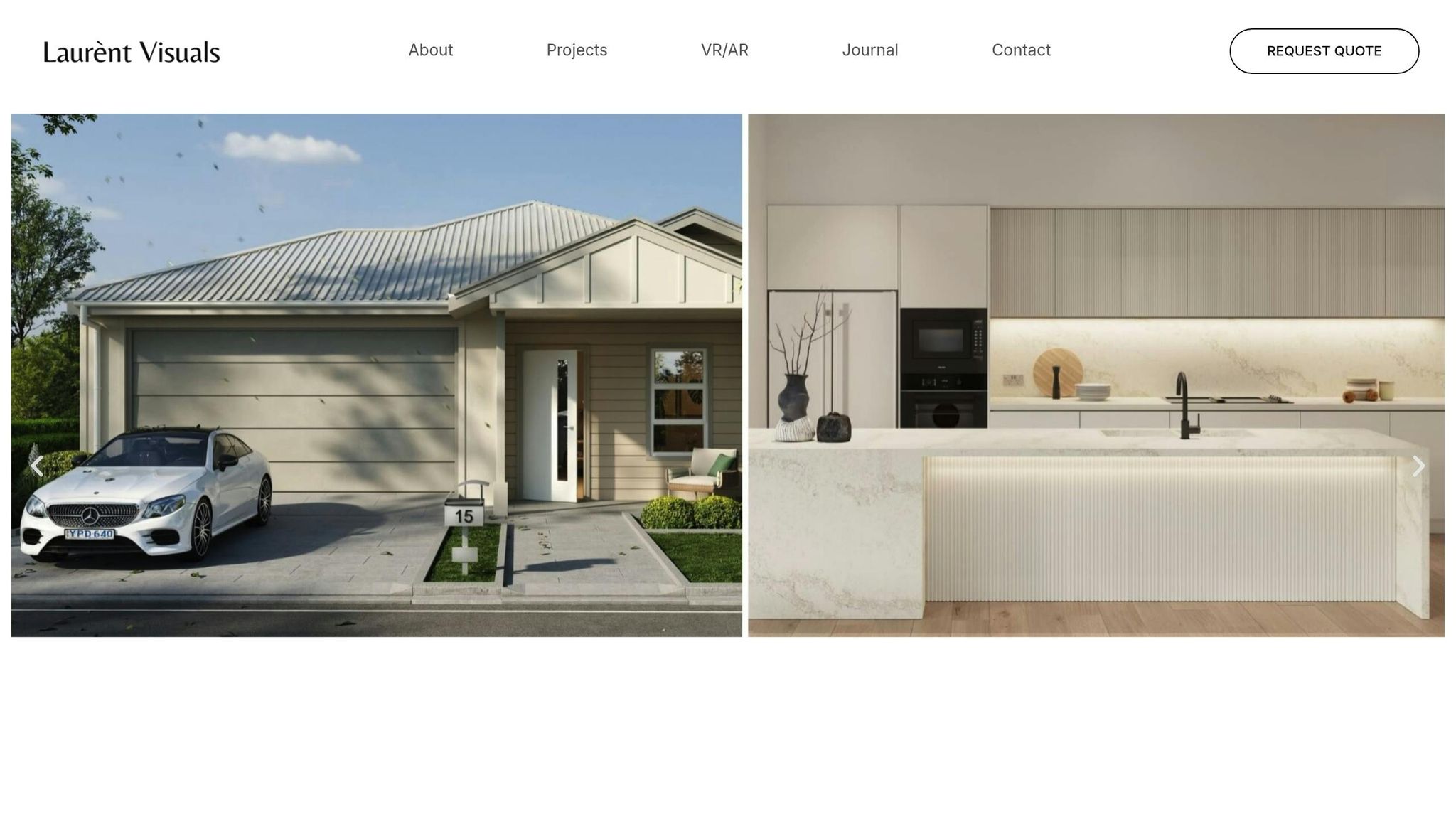
Laurent Visuals has mastered a structured approach to creating premium 3D renders that resonate with Australian property developers. Based in Brisbane, this architectural visualisation studio understands the specific needs of the Australian property market and has fine-tuned its process to maximise the effectiveness of every render.
"Laurent Visuals crafts compelling visual stories of unbuilt spaces for property developers and project marketers across Australia and New Zealand."
…continued on the original article.