

In Australia’s dynamic property market, selling homes before they’re built is a challenge. Buyers want certainty, and 3D visualisations deliver just that. By offering lifelike renders, virtual walkthroughs, and 360-degree views, developers can showcase unbuilt properties in a way that static floor plans never could. These tools help buyers visualise spaces, understand layouts, and connect emotionally with their future homes, making them more confident in their decisions.
Here’s why 3D visualisations are transforming pre-construction sales:
- Builds Buyer Confidence: Photorealistic renders let buyers see finishes, lighting, and spatial flow.
- Encourages Emotional Connection: Virtual tours help buyers imagine their daily lives in the property.
- Justifies Pricing: Clear visuals highlight premium features and location benefits.
- Saves Time & Money: Developers reduce reliance on costly showrooms and printed brochures.
- Boosts Sales & Funding: Early buyer interest leads to faster sales and stronger investor confidence.
As Australian buyers demand more clarity, 3D visualisations have become a must-have tool for developers to secure off-the-plan sales effectively.
Touchscreen 3D Tool for Pre-Construction Real Estate Sales
Solving Pre-Sale Problems with 3D Visualisations
Selling properties before construction begins is no small feat. Without a physical space for buyers to step into, developers face hurdles like scepticism, price justification, and building emotional connections - all while competing against existing homes with tangible features. This is where 3D visualisations shine, turning abstract concepts into compelling visual experiences that help drive sales. Here’s how they address these challenges.
Reducing Buyer Uncertainty with Photorealistic Renders
Floor plans and sketches often leave buyers with more questions than answers. They struggle to grasp how spaces will feel, how light will flow, or how rooms connect. Photorealistic renders solve this problem by offering a vivid preview of the finished space.
These high-quality visuals go beyond what blueprints can communicate. Buyers can see how the morning sun lights up a kitchen, how living areas flow seamlessly, or how premium finishes elevate the design. For luxury developments, this level of detail is crucial - buyers expect to see the sophistication they’re paying for.
Confidence grows when buyers can picture themselves in the space. Whether it’s visualising their furniture placement, understanding storage solutions, or appreciating the views, these renders transform hesitation into commitment.
Spatial proportions also become clearer. For instance, a 2.7-metre ceiling height might seem abstract on paper, but a render shows how open and airy it feels. Similarly, a 12-square-metre bedroom becomes relatable when buyers see how it comfortably accommodates a bed, wardrobe, and desk.
Connecting with Buyers Through Virtual Walkthroughs
Static images are powerful, but interactive tools take engagement to another level. Virtual walkthroughs allow buyers to explore a property as if they were there, building stronger emotional connections.
This is especially valuable for interstate or international buyers who can’t visit in person. These walkthroughs simulate an on-site experience, helping buyers understand the layout, flow, and finer details of the property.
The emotional impact is undeniable. Buyers can imagine their daily routines - cooking in the kitchen, relaxing in the living room, or watching the sunset from the balcony. This ability to visualise their future life in the property often turns interest into action.
Virtual walkthroughs also cater to individual preferences. Some buyers want to inspect every detail, while others prefer a quick overview. Interactive tours let them explore at their own pace, ensuring they feel confident and informed - key factors in preventing buyer’s remorse.
Supporting Price Points Through Clear Visuals
3D visualisations play a critical role in justifying premium pricing by showcasing value in a way words and numbers can’t. Buyers can see, rather than imagine, the quality of materials, the thoughtfulness in design, and the overall craftsmanship, making them more willing to pay higher prices in Australia’s competitive market. Detailed renders highlight premium features that might otherwise be overlooked. Buyers can appreciate the elegance of stone benchtops, the precision of custom joinery, and the sophistication of lighting designs. These visuals elevate developments from generic to exceptional, helping buyers see them as worth the investment. Offering visualisations of upgrade options also boosts sales. Buyers can explore how premium appliances, upgraded flooring, or custom colour schemes enhance their living experience. This approach not only increases perceived value but often leads to higher average sale prices.
Lastly, clear visuals help buyers connect price with location advantages. Whether it’s harbour views, city skylines, or landscaped gardens, renders make these benefits unmistakable. When the value is visually evident, price objections fade, and buyers focus on securing their ideal property rather than negotiating. This clarity builds trust and positions projects as desirable, high-value investments.
Main 3D Visualisation Methods and Tools
Choosing the right visualisation method can make or break pre-construction sales. Photorealistic renders play a key role here, offering detailed and lifelike images of both interiors and exteriors. These visuals include everything from textures and furniture to landscaping and environmental details, giving buyers a clear sense of space and how a building fits into its surroundings. By bridging the gap between imagination and reality, these renders help buyers picture the finished product, easing uncertainties and reinforcing the perceived value - an important factor for meeting Australian buyers' expectations and justifying premium price points.
Photorealistic Renders for Interior and Exterior Views
Photorealistic renders not only showcase the design but also highlight the quality and attention to detail in a project. They allow potential buyers to "see" their future home or investment, complete with realistic lighting, materials, and finishes. By providing this level of clarity, developers can build trust and excitement, which are crucial for closing sales.
Virtual Reality Walkthroughs and Interactive Tours
While photorealistic renders provide stunning still visuals, virtual reality (VR) walkthroughs and interactive tours take engagement a step further. These tools allow buyers to explore a space as if they were physically there, offering a dynamic and immersive experience. Whether it's walking through a kitchen or stepping out onto a balcony, VR creates a connection to the property that static images can't match.
360-Degree Views and Visual Storytelling
For a more comprehensive perspective, 360-degree views allow users to look around a space from every angle. Combined with visual storytelling, these views can guide buyers through a narrative - showcasing the flow of a home, its features, and how it fits into their lifestyle. This approach not only informs but also captivates, making the property feel more tangible and desirable.
Advantages of 3D Visualisations for Developers and Buyers
The advantages of 3D visualisations go far beyond just looking impressive - they offer practical benefits for both developers and buyers. These tools elevate property presentations, making them more engaging and effective, especially in Australia's competitive property market. They do more than just enhance visuals; they redefine how properties are marketed and sold before construction.
For developers, 3D visualisations streamline sales processes and trim marketing costs. Traditional methods often rely on physical showrooms and printed brochures, which can be expensive and time-consuming. In contrast, high-quality 3D renders and virtual tours captivate potential buyers, instilling confidence in the project while reducing the need for costly physical setups.
On the other hand, buyers gain clarity and assurance through these detailed visuals. They can explore layouts, finishes, and spatial arrangements, which helps reduce uncertainty and makes the decision-making process much easier.
Comparison Table: Developer vs Buyer Benefits
Developer Benefits Buyer Benefits
Faster Sales Cycles – Shorten the time from enquiry to signed contracts Informed Decision Making – Clearly visualise the property before it’s built
Lower Marketing Costs – Cut down on expenses for physical showrooms and printed materials Reduced Purchase Risk – Understand layouts, finishes, and spaces with greater accuracy
Higher Conversion Rates – Increase the likelihood of turning interest into sales Enhanced Confidence – Make decisions with more certainty
Early Cash Flow – Secure deposits and settlements before construction ends Better Value Assessment – Easily compare features and finishes across properties
Reduced Change Requests – Minimise costly modifications during construction Lifestyle Visualisation – Imagine how the property will fit into daily life
Professional Credibility – High-quality presentations build trust with investors and buyers Time Savings – View multiple properties virtually, without visiting physical sites
These advantages directly impact financial performance, making 3D visualisations a game-changer for property marketing.
Effects on Sales Numbers and Marketing ROI
The financial benefits of 3D visualisations are hard to ignore. Developers who adopt these tools often see higher conversion rates and faster sales compared to traditional marketing approaches. By engaging buyers early with realistic and interactive visuals, developers can secure strong returns on investment while ensuring smoother cash flow throughout the project.
Moreover, these tools improve pre-sales performance, which can help developers secure better financing terms during construction. For buyers, the ability to preview a property in detail before it’s built leads to higher satisfaction and a better overall experience. By offering a clear and realistic glimpse of the final product, 3D visualisations not only enhance buyer confidence but also contribute to a more positive perception of the property post-completion.
sbb-itb-1b6d2bc
Case Studies: Pre-Construction Sales Success with 3D Visualisations
Examples from cities like Melbourne, Brisbane, Perth, and the Gold Coast show how 3D visualisations are changing the game for pre-construction sales. These tools not only engage buyers but also speed up the sales process.
Buyer Confidence and Faster Sales
In Melbourne, a luxury apartment project used photorealistic 3D renders and virtual walkthroughs to highlight layouts and finishes. These immersive visuals gave buyers a clear sense of the spaces, increasing interest and building trust before construction even began.
Brisbane developers took a similar approach, using interactive 360-degree views to showcase natural light and spatial flow. Buyers could visualise how the apartments would feel at different times of the day, which helped answer common questions and made the decision-making process quicker, cutting down on lengthy follow-ups.
Building Developer Credibility and Securing Funding
3D visualisations also play a key role in boosting developer credibility and securing financial backing. In Perth, detailed presentations of a project’s design and market appeal helped developers communicate their vision clearly to potential investors, making funding discussions more effective.
On the Gold Coast, a residential development used virtual tours to reach buyers beyond the local market. These tours highlighted individual apartment features as well as lifestyle amenities, attracting interstate investors and securing strong pre-construction commitments by making the project’s potential tangible.
In a regional project, 3D visualisations were used to overcome the challenge of distance. Buyers from metropolitan areas could explore the property and its surroundings - including local dining and cultural attractions - without needing to visit in person. This approach helped the development achieve early pre-sale success by offering a vivid sense of the regional lifestyle.
These case studies highlight how 3D visualisation is shaping the future of pre-construction marketing, giving developers the tools to sell off-plan properties with greater confidence and efficiency.
How Laurent Visuals Delivers Pre-Construction Sales Results
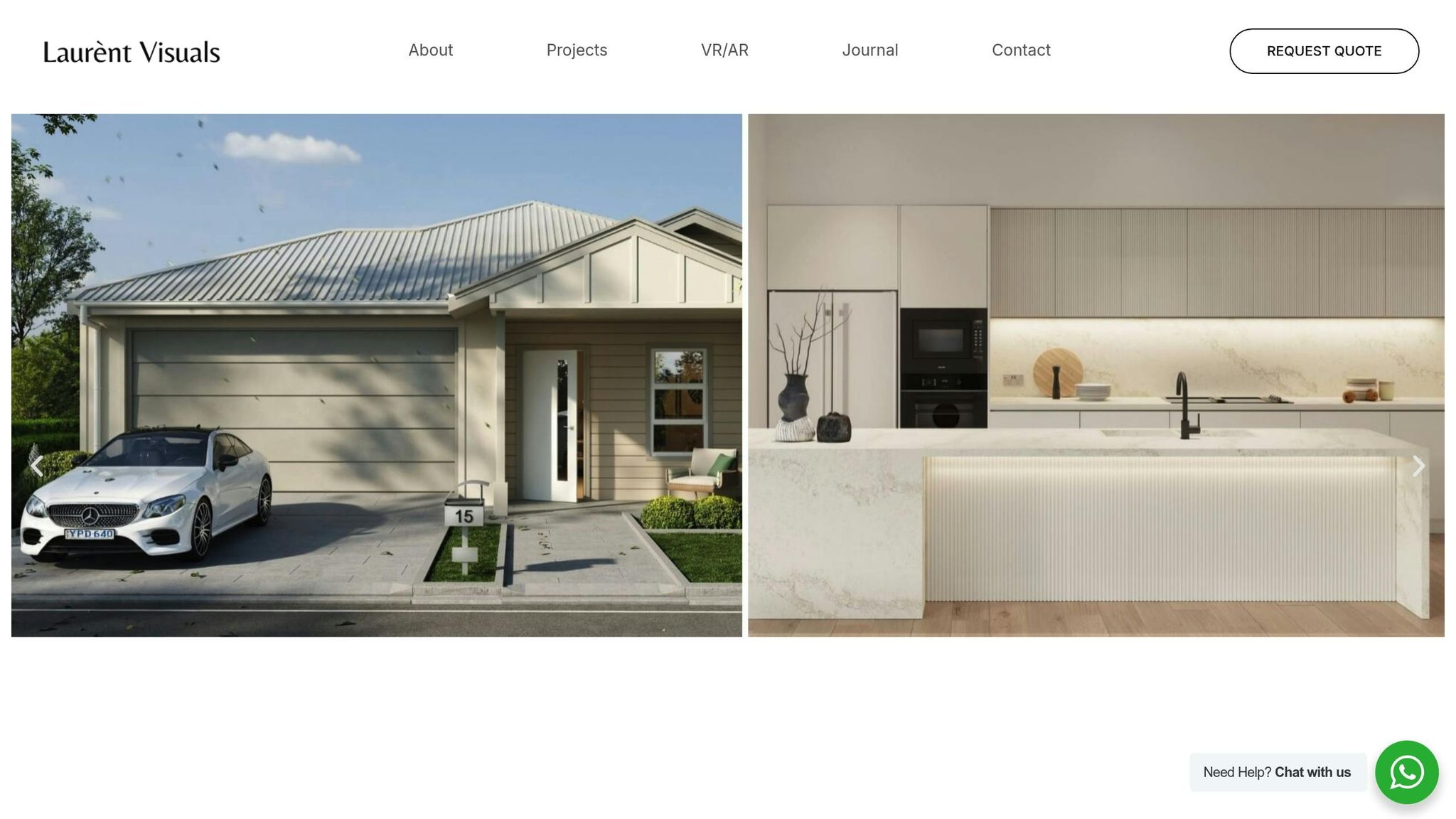
Laurent Visuals, a Brisbane-based studio, has built a reputation for helping developers secure early sales and investments by turning architectural concepts into engaging, sales-ready visualisations. Their expertise lies in crafting visual stories that bring unbuilt properties to life, making them irresistible to potential buyers.
High-Quality 3D Renders and Virtual Experiences
Laurent Visuals specialises in creating photorealistic 3D renders and immersive virtual reality walkthroughs. These visuals replicate natural light and textures with precision, offering buyers a chance to truly connect with spaces that don’t yet exist. By simulating the look and feel of the future property, these tools help buyers imagine themselves living there.
…continued on the original article.